The Waterways Collective: Multidisciplinary mapping of Atlantic salmon migration
Feb
3
6:00 pm18:00

The Waterways Collective: Multidisciplinary mapping of Atlantic salmon migration

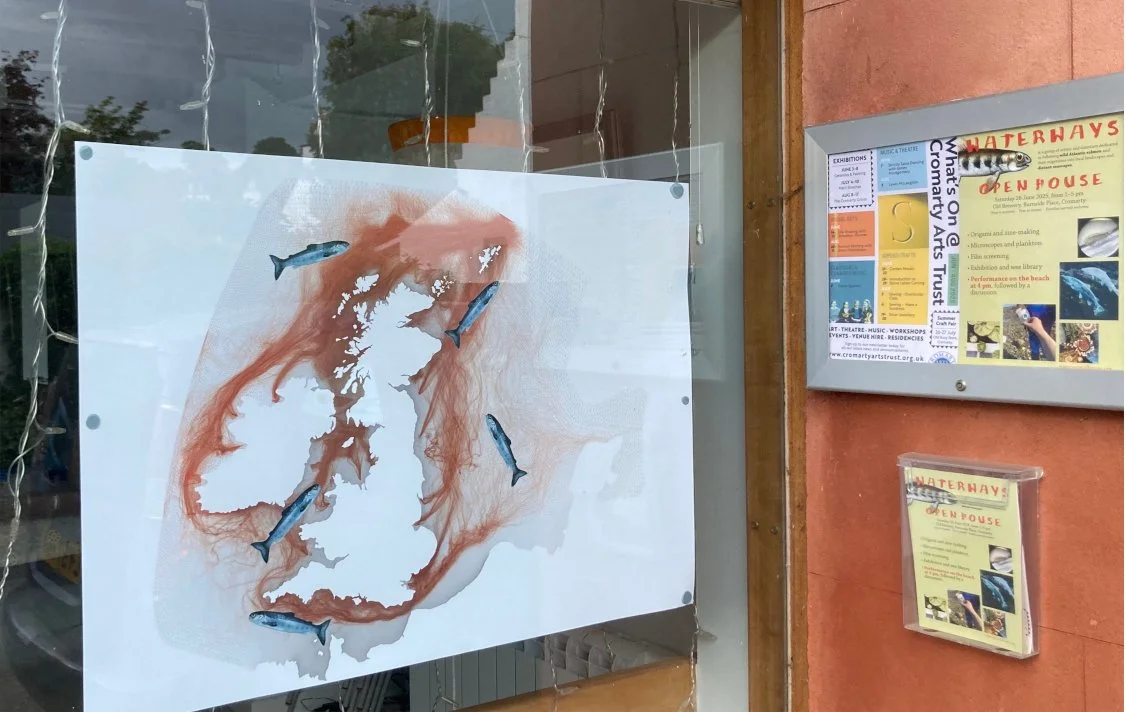
In our third Mapping Fluid Worlds seminar, the Scotland-based art-science group the Waterways Collective will share their recent collaborative work following Atlantic salmon through Scottish rivers as they journey towards the sea. Sharing documentation, artworks, collages and maps from their residencies in Feshie Bridge and Cromarty, the collective will explore the interconnectedness of art and science, landscapes and seascapes and human communities and salmon.

Book your tickets HERE on Eventbrite.

The Waterways Collective is a Scotland-based art-science collaboration, currently following Atlantic salmon and their migrations into local landscapes, distant seascapes, multi-species histories, and possible futures. The group initiated an annual cycle of field research, collaborative writing and art-making, and public performance, with a journey along the River Spey in May 2024. In June 2025 they continued their fieldwork at Cromarty, where they curated a community arts day at Cromarty Arts Trust. The collective is working towards an annual travelling festival and porous interdisciplinary network, exploring stories of migration and refuge, resilience, kinship, and ecological entanglements.

View Event →

Mapping resilience: supporting water knowledge networks across geographies - Tracey Benson
Nov
21
10:00 am10:00

Mapping resilience: supporting water knowledge networks across geographies - Tracey Benson

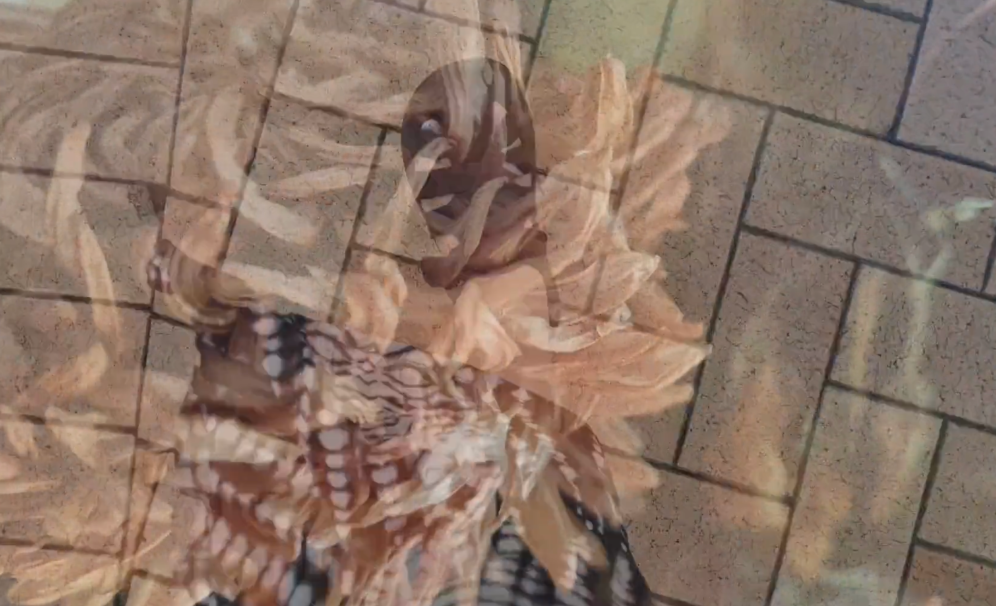
We continue our Mapping Fluid Worlds Seminar Series with Tracey Benson. In this presentation Tracey will discuss some of the implications for mapping local understandings of water management in flood prone south east Queensland and how transdisciplinary approaches can support resilience in a future of flood, not just in SEQ but in all of our communities.

Book your tickets HERE on Eventbrite.

Dr Tracey M Benson works at the nexus of media arts, digital transformation, ecological systems and citizen empowerment through connecting to place and identity, having originally trained in the fine arts disciplines of photography and printmaking. With a passion for understanding different knowledge systems and engaging and activating audiences, she often collaborates with Indigenous communities and Elders, knowledge keepers, technologists and scientists. Belonging, place, wellbeing and identity are ongoing themes in her socially engaged practice. Tracey's work has been extensively presented internationally in media arts festivals and exhibitions including ISEA, Walk*Listen*Create, Balance UnBalance, Transmediale and touring exhibitions. Tracey has also been commissioned to produce numerous public artworks including murals, installations and participatory experiences for audiences. As a researcher she has an extensive background including a PhD in Media Arts and Technology (Australian National University), a Masters in Applied Science by Research looking at energy vulnerability and barriers to change (University of Canberra), and a Masters of Arts by Research focusing on souvenirs and personal collections (Queensland University of Technology). Tracey was recently awarded a full scholarship for a second PhD to explore climate resilient home design for flood futures at University of Queensland. Her research on issues related to belonging, place, wellbeing and pro-environmental behaviour change underpin her ethos and focus as a transdisciplinary practitioner.
View Event →
The Flood Necklace: an exploration of how data-sculpture can carry a river’s history - Anne-Laure Fréant
Oct
29
6:00 pm18:00

The Flood Necklace: an exploration of how data-sculpture can carry a river’s history - Anne-Laure Fréant

Our Seminar Series 2025-26 Mapping Fluid Worlds starts with an exploration of The Flood Necklace by Anne-Laure Fréant. The Flood Necklace is a data-object (or data-sculpture) that embeds water-level data from all recorded flood events of the Loire River in the city of Orléans, spanning 1800 to 2003. This object questions the conventional ways we represent and record flooding (typically through 2D maps) and explores alternative forms for representing, storing, sharing, and remembering environmental histories. It also raises the issue of the “vertical axis”, a dimension critical in river stratigraphy but difficult to visualize without 3D modeling—and even harder to sculpt into physical objects, making our conception of river’s shapes often “present based”. We also present other data-objects that attempted to record and display historical environmental data, as part of an ongoing reflection on river histories representation.

Book your tickets HERE on Eventbrite.

Anne-Laure Fréant is a geographer by training, having studied natural risks and cultural geography in France and Canada for seven years. After her studies, she began a career in IT but maintained a strong interest in colonial and environmental history, especially in Canada. She discovered the field of data physicalization while working for the French open data administration and is now exploring how the creation of data-objects can enrich the ways we record, understand, and remember environmental history.

View Event →